How Much Does UGC Cost? A 2026 Price Breakdown
A clear-eyed look at what user-generated content really costs in 2026 — creators, agencies, and AI — plus a framework for spending on video that actually earns its keep.
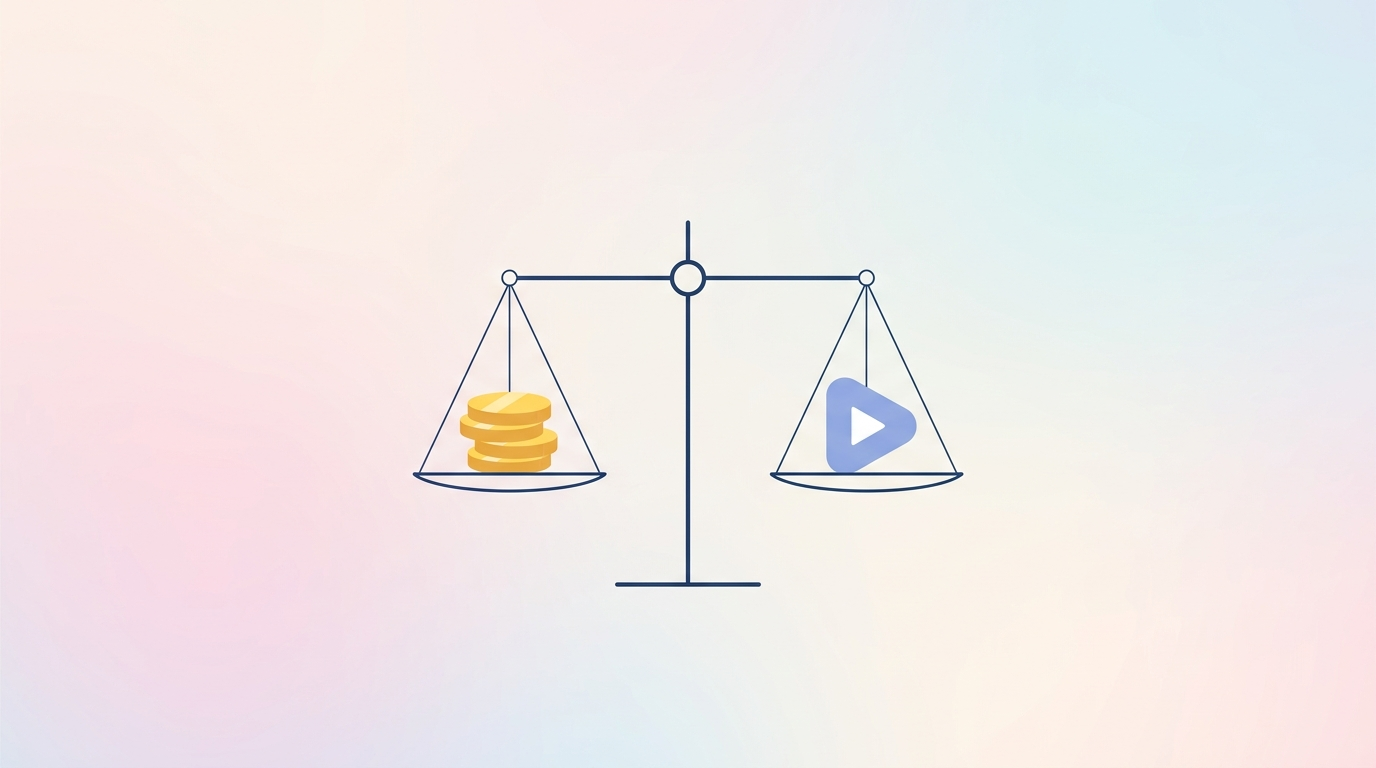
The right question isn't "how much does one video cost?" It's "how much does one validated learning cost?"
How much does UGC cost in 2026? A single creator-made UGC video typically runs $100 to $500, a managed agency charges $2,000 to $10,000+ per month, and AI-generated UGC lands between $1 and $10 per video at volume. That is the short answer. But the sticker price is the least interesting number in the whole equation — and if it's the only one you look at, you'll almost certainly overspend on the wrong thing.
This guide breaks down the real, all-in cost of user-generated content across every sourcing option, exposes the hidden fees that rate cards conveniently omit, and offers a simpler way to think about video spend: not cost-per-video, but cost-per-test. Whether you're a founder buying your first testimonial or a performance marketer running dozens of creatives a month, the goal is the same — to know exactly what you're paying for and why.
What is UGC, and why does the price vary so wildly?
User-generated content (UGC) is video or photo content made in the casual, authentic style of a real customer rather than a polished studio ad. It's the person-holding-the-product-in-their-kitchen look that outperforms glossy commercials on TikTok, Instagram Reels, and YouTube Shorts precisely because it doesn't look like an ad.
The price varies wildly because "UGC" describes a style, not a supply chain. The same 30-second talking-head video can be sourced three completely different ways — a freelance creator, a full-service agency, or an AI tool — and each carries a radically different cost structure. Understanding those structures is the whole game.
How much does UGC cost by sourcing method?
Here's the 2026 landscape at a glance. These are blended market ranges for a single ~30-second video, before usage rights and revisions.
| Sourcing method | Typical cost per video | Turnaround | Cost at volume (5 variants) |
|---|---|---|---|
| Beginner freelancer | $75–$300 | 5–10 days | $375–$1,500 |
| Mid-tier creator | $300–$1,000 | 7–14 days | $1,500–$5,000 |
| Top-tier creator | $600–$3,000+ | 2–3 weeks | $3,000–$15,000+ |
| Managed agency | $300–$1,000 per video, or $2,000–$10,000+/mo retainer | 2–4 weeks | Retainer-dependent |
| AI UGC (at volume) | $1–$10 | Minutes | $5–$50 |
The pattern that matters: creator and agency costs scale roughly linearly with volume, while AI costs flatten after setup. One creator video for $400 means five variants cost around $2,000. Five AI variants of the same concept can cost less than a large coffee. Independent 2026 breakdowns put the spread between traditional and AI UGC at anywhere from 10x to a startling 99x per unit.
Freelance creators: the authenticity premium
A single freelance UGC video runs roughly $100 to $500, with the market average sitting near $198 per deliverable. Beginners (0–1 year) charge $150–$300; established creators with a proven conversion track record command $400–$800; and top-tier talent runs $600 to $3,000 and beyond. Bundles help — order five or more videos and you'll often see a ~19% discount, dropping a $200 video to around $162.
What you're paying for is genuine human presence: a real face, a real voice, and the trust that comes with both. What you're also paying for is time. Sourcing, briefing, shipping product, waiting for filming, and running revision rounds turns a "quick video" into a two-to-three-week project.
Agencies: convenience at a markup
A managed agency handles sourcing, briefing, editing, and rights for you. That convenience runs $300–$1,000+ per video à la carte, but most agencies prefer retainers of $2,000 to $10,000 per month — sometimes far more for full-service creative teams. Agencies make sense when you need reliable volume, hands-off management, and legal cover on usage rights. They rarely make sense when you're still trying to figure out what message actually works.
AI UGC: the volume play
AI UGC tools generate creator-style video from a script, a product image, or a text prompt — no casting, shipping, or filming. At volume, the per-video cost drops into single digits. The trade-off is that AI is unbeatable for iteration and speed but still can't fully replicate a specific human creator's charisma or a niche community's in-group signals. The smart money treats these as complementary, not either/or. (For the how-to, see our guide on making AI UGC ads that actually convert.)
The hidden costs no rate card shows you
The per-video number is a down payment, not the full price. Four line items quietly inflate the real cost of creator and agency UGC:
- Usage rights. The base rate usually covers organic posting only. Running the video as a paid ad adds 30–50% of the base; perpetual rights can add 100–150%.
- Whitelisting / Spark Ads. Running ads through the creator's own handle often costs an extra 30–100% of the base fee per month.
- Revisions. The first edit is included; further rounds are billed, and a hook that misses means starting over.
- Management time. Your hours spent briefing, chasing, and reviewing are a real cost — they just never appear on an invoice.
Add these up and a "$300 video" can quietly become an $800 line item before a single dollar of media spend.
The better metric: cost-per-test, not cost-per-video
Here's the reframe that changes how you budget. In performance marketing, you don't actually buy videos. You buy learnings — validated answers to the question "what makes this audience click?" The video is just the vehicle.
So the number that should drive your budget isn't cost-per-video. It's cost-per-test: how much you pay to learn one thing about your audience.
Cost-per-test = (production cost + rights + management time) ÷ number of distinct variables you can validate.
This single shift explains why AI and human UGC aren't really competitors — they win at different jobs:
- Discovery phase (find the winner). You don't yet know which hook, angle, or pain point resonates. Here you need many cheap swings. Testing 20 opening lines with human creators is financially absurd; with AI it's a Tuesday. Low cost-per-test wins, and AI's cost-per-test is close to zero.
- Scale phase (amplify the winner). You've found the message that converts. Now authenticity and production polish compound returns, and a great human creator — or a hybrid AI-plus-creator workflow — earns its premium.
Most brands invert this. They spend $2,000 on a single "hero" creator video before they know what works, then have no budget left to test alternatives. They bought one expensive guess. The disciplined approach is to make guessing cheap, find the winner, then spend up. Our ad creative testing playbook goes deeper on structuring these tests.
A practical budgeting framework
Match your spend to your stage:
- Pre-product-market-fit / new offer: Prioritize volume and iteration. Generate 10–20 AI variations, kill the losers fast, and spend almost nothing to find your angle.
- Proven offer, scaling ads: Blend. Use AI to keep feeding fresh variations against creative fatigue, and commission human creators for your top-performing concepts where authenticity lifts conversion.
- Brand / consideration content: Invest in craft. A polished product video or a standout creator partnership carries weight here.
The mistake to avoid at every stage is paying scale-phase prices for discovery-phase work.
The bottom line
UGC in 2026 costs anywhere from a dollar to several thousand dollars per video — and both extremes can be the right choice. Freelancers and agencies sell authenticity and hands-off convenience; AI sells iteration speed and near-zero marginal cost. The brands that win aren't the ones who find the "cheapest" UGC. They're the ones who stop asking "how much does a video cost?" and start asking "how cheaply can I learn what my audience wants?" Answer that, and every dollar you spend afterward works harder.
Want to make the discovery phase nearly free? rgba turns a prompt or a product photo into scroll-stopping UGC-style videos in about three minutes — so you can test ten angles before lunch and spend your creator budget only on the winners.
Frequently asked questions
How much does a UGC video cost in 2026?
A single UGC video typically costs $100 to $500 from a freelance creator, with an average near $198 per deliverable. Beginner creators charge $150–$300, while top-tier talent commands $600 to $3,000+. AI-generated UGC costs roughly $1 to $10 per video at volume, and managed agencies run $2,000 to $10,000+ per month on retainer.
Is AI UGC cheaper than hiring a creator?
Yes — dramatically. At volume, AI UGC costs single-digit dollars per video versus $100–$500+ for a freelance creator, a spread of 10x to nearly 99x per unit. AI also flattens costs as volume rises, while creator costs scale linearly. Human creators still win on authenticity for scaling proven winners, so many brands use both.
What hidden costs come with UGC?
The base rate usually covers organic posting only. Paid-ad usage rights add 30–50% of the base, perpetual rights add 100–150%, and whitelisting (running ads through the creator's handle) adds 30–100% per month. Revision rounds beyond the first are billed, and your own management time is an unlisted but real cost.
How many UGC videos do I need to test?
For a new offer, plan to test 8–15 distinct variations — different hooks, angles, and pain points — to reliably find a winner. This is why cost-per-test matters more than cost-per-video: high per-unit prices make proper testing unaffordable, whereas cheap AI variations let you validate a message before committing budget to polished production.
When is it worth paying for a human UGC creator?
Pay the human premium in the scale phase, once you already know which message converts. A genuine face and voice lift trust and conversion on a proven winner, and the authenticity is hard to fake. In the discovery phase, when you're still guessing what works, cheap high-volume testing delivers far better return on spend.
Sources
- UGC Rates 2026: The Ultimate Guide With Real Numbers — Influee
- How Much Does UGC Cost in 2026? Agencies vs Creators vs AI — Sepia Lab
- UGC Creator Pricing in 2026: What It Really Costs — DesignRevision
- AI UGC Video Cost vs Creator Cost: the 2026 spread — Studioverse
- UGC Ads Rates: traditional UGC vs AI UGC (2026) — Videotok
- UGC Creator Pricing in 2026: What Brands Actually Pay — PPC.io