Video Call to Action: 17 CTAs That Convert
The hook gets the view. The call to action gets the result. Here is how to end a short-form video so people actually do something.

A hook earns attention. A call to action spends it. Most creators nail the first three seconds and then waste the last three.
A great hook earns a few seconds of attention. A great video call to action decides what those seconds were worth. Yet most creators obsess over the opening and improvise the ending — trailing off, stacking three vague asks, or slapping "follow for more" over the last frame out of habit. The result is predictable: strong watch time, nothing to show for it.
This guide fixes the neglected half of the video. Below is a short, direct answer, an original framework for choosing the right ask, a swipe file of 17 calls to action that convert, and the placement rules that make them land. It is written for marketers, founders, and creators who already make short-form video and want it to do a job beyond racking up views.
What is a video call to action?
A video call to action (CTA) is the single, explicit instruction you give a viewer at the moment the video has earned their attention — "follow for part two," "save this for your next launch," "tap the link in bio." It converts passive watching into a measurable action: a follow, a save, a share, a click, or a purchase.
The distinction that matters: a hook spends nothing and asks for nothing, while a call to action spends the attention you just earned. That is why a weak CTA is so costly. You paid the full price of production and distribution to get someone to the end of the video, then declined to collect.
The CTA Ladder: match the ask to the viewer's trust
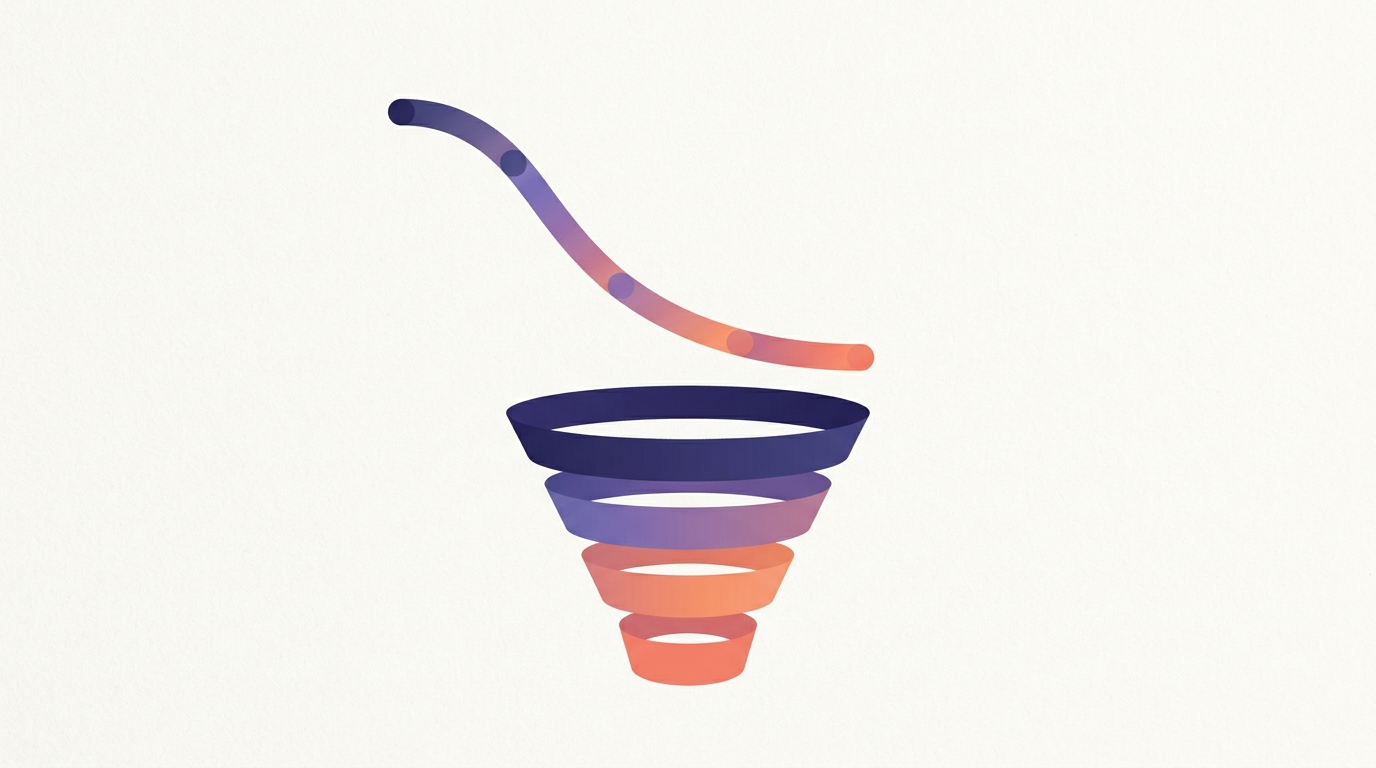
The most common CTA mistake is not bad wording. It is asking for too much, too soon. A viewer who found you ninety seconds ago is not going to buy; asking them to is friction that kills the only action they were willing to take. Think of asks as rungs on a ladder, ordered by how much trust each one costs the viewer:
- Engage — like, comment, save, share. Nearly frictionless. Costs the viewer nothing and the algorithm rewards it. The default for cold audiences.
- Follow — a small commitment: "I want more of this." Earned when the video delivered a complete, useful payoff.
- Click — leave the app, open a link, read more. Real friction. Reserve it for warm viewers or genuinely high-value offers.
- Convert — buy, book, sign up. The top rung. Appropriate only when the video itself did the selling.
The rule the ladder encodes: ask for the highest rung the video actually earned, and no higher. An entertaining clip from a stranger earns an engage or a follow. A specific, problem-solving demo can earn a click. A full UGC testimonial with a clear offer can earn a conversion. Reaching past the rung you earned is the fastest way to get ignored — a dynamic we unpack in the five short-form metrics that predict a hit.
A hook earns attention. A call to action spends it. Most creators nail the first three seconds and then waste the last three.
The 4 rules of a CTA that converts
Before the swipe file, four rules that apply to every ask regardless of rung.
1. One ask per video
Stacking requests — "like, comment, follow, and check the link" — dilutes each one and signals desperation. Pick the single rung the video earned and ask for that alone. If you want a follow, do not also beg for a click. Clarity is conversion.
2. Make it specific, with a promise attached
"Follow for more" is wallpaper. "Follow — part two breaks down the pricing" tells the viewer exactly what they get. A concrete promise reframes the follow as a transaction with an obvious payoff, which is why specific CTAs reliably outperform generic ones.
3. Say it and show it
Roughly 75% of mobile video is watched on mute, and on Facebook-style feeds that figure has been reported as high as 85%. A spoken-only CTA is invisible to most of your audience; a text-only CTA feels impersonal to the rest. Do both — voice the ask and burn it into the final frame as an on-screen overlay. For the muted majority, the overlay is the CTA.
4. Match the ask to the content type
Entertainment earns a follow; how-to earns a save; a comparison or hot take earns a comment. The best CTA is the one the format naturally invites. A tutorial that ends with "save this so you have it when you need it" is asking for the action the viewer already wanted to take.
17 video call to action examples (swipe file)
Grouped by the rung they target. Steal, adapt, and keep each to a handful of words.
To drive engagement (likes, saves, shares, comments)
- "Save this — you'll want it for your next launch."
- "Send this to the one person on your team who needs it."
- "Tell me in the comments: which one are you trying first?"
- "Agree or disagree? I'll read every reply."
- "Share this with someone still doing it the old way."
To grow followers
- "Follow — part two covers the part nobody talks about."
- "I post one of these every day this week. Follow so you don't miss it."
- "There's a step three. It's on my page."
- "Follow if this saved you an hour."
To earn the click
- "Full template's in the link in bio — it's free."
- "I pinned the breakdown in the comments."
- "Everything I mentioned is linked below."
- "Want the checklist? Link in bio, no email required."
To convert
- "Try it free — link in bio, takes two minutes."
- "We're open for three more spots this month. Book below."
- "Use the code in the caption before Friday."
- "See how it works on a real product — link in bio."
Notice what the strongest lines share: a single verb, a reason to act now, and a specific payoff. None of them say "click here" — a dead phrase that describes a mechanic instead of a benefit.
Where should the CTA go in a video?
Not only at the end. The highest-performing short-form videos seed the CTA and then confirm it:
- The end frame (always): Hold the final beat for one to two seconds on a static card with the ask, voiced and on screen. Do not cut to black the instant you stop talking — the last frame often lingers during a rewatch.
- The mid-roll nudge (optional): For videos over ~30 seconds, a light touch in the middle ("save this before I get to the good part") captures viewers who will not make it to the end.
- The caption and pinned comment (the quiet workhorses): On Reels especially, the caption carries more weight than in-video text, and a pinned comment is the most reliable place to drop a link without disrupting the watch. Links in captions and comments also survive the muted viewing problem entirely.
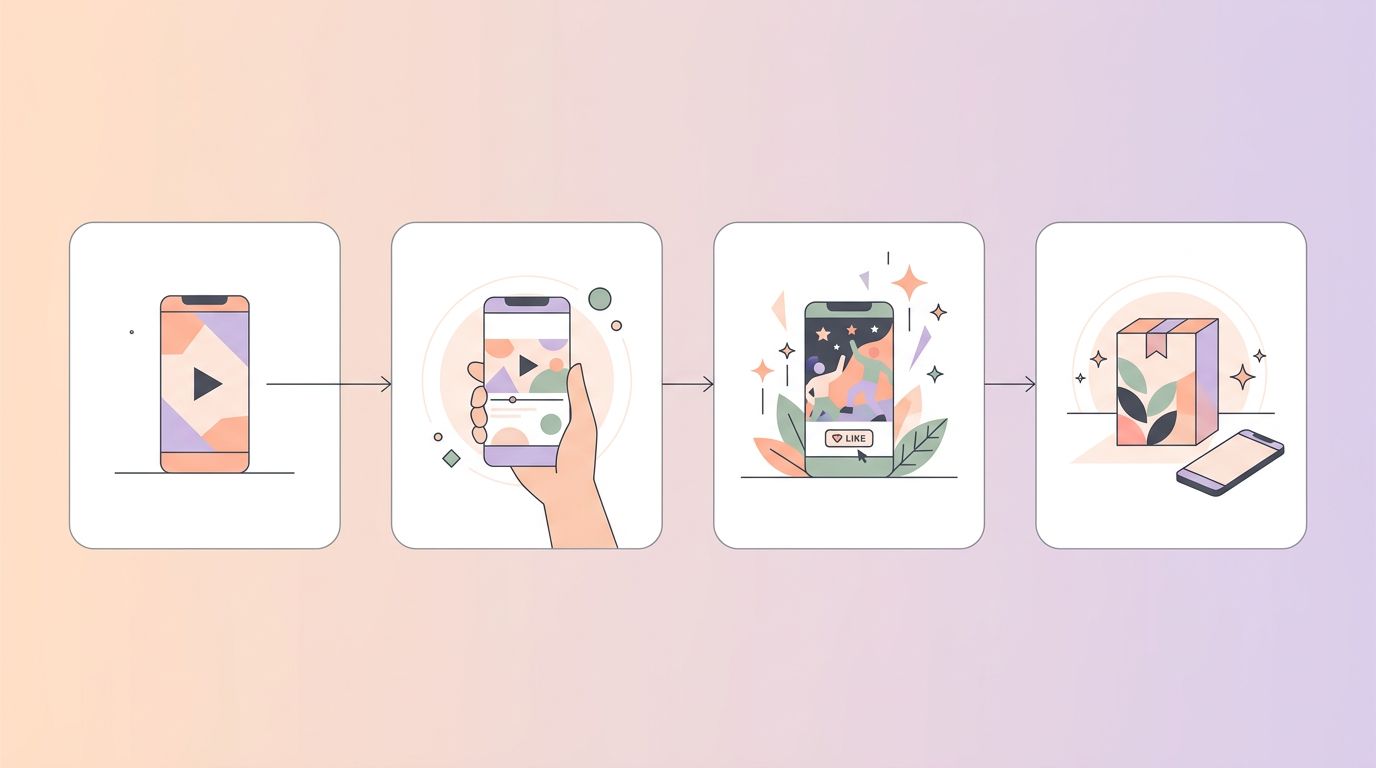
A practical sequence: tease the payoff in the hook, deliver it in the body, and name the action on the end frame. If you need the full structure, our video ad script template maps the ask into a repeatable skeleton.
CTA strategy by platform
The right ask shifts with how each platform distributes and rewards video.
| Platform | Best primary ask | Why |
|---|---|---|
| TikTok | Follow or comment | The For You page rewards engagement velocity; comments and follows compound reach. |
| Instagram Reels | Save or share | Instagram has confirmed sends and shares are among its most important ranking signals across surfaces; saves are widely treated as worth several likes. |
| YouTube Shorts | Subscribe or pinned-comment click | Shorts viewers skew sound-on and session-minded; pinned comments are the cleanest path off-platform. |
| Share | Distribution still leans on social sharing more than any other action. | |
| Comment or click | Professional context tolerates a direct link and rewards conversation. |
The pattern: on discovery-first platforms, your CTA should feed the algorithm (engage, follow) before it feeds your funnel (click, convert). Picking a save or share on Reels is not just good for the viewer relationship — it is the ask the distribution system is paying the most for right now.
The mistakes that kill CTAs
- The pushy close. Overly salesy or desperate asks ("SMASH that follow button!!") read as inauthentic and can depress the very engagement they chase. Confidence converts; begging repels.
- The orphan link. Saying "link in bio" with no link in the bio — or a bio pointing at the wrong thing. Audit it.
- The silent ending. Letting the video dribble to a stop with no ask at all. Every published video should know what it wants.
- The mismatched rung. Asking strangers to buy. Asking loyal followers only to "like." Calibrate to the relationship.
- The buried CTA. A spoken ask with no on-screen version, lost to the muted 75%.
Putting it together
Treat the call to action as a design decision made before you shoot, not a reflex tacked on in the edit. Decide the one rung this video can earn, write the ask as a specific promise, and plan to both say it and show it on a held end frame. Then let the platform tell you which rung pays — and climb only as fast as the trust allows.
If you are producing video at volume, the end frame is also the easiest piece to systematize: a clean, legible CTA card, consistent across every clip. Tools like RGBA's AI video generator can spin up publish-ready short-form videos — the ideal place to standardize a strong closing frame instead of improvising one each time. Pair this with a scroll-stopping first three seconds, and you have bookended the two moments that decide whether a video merely gets watched or actually works.
Frequently asked questions
What is a video call to action?
A video call to action is a single, explicit instruction given at the end of a video telling viewers exactly what to do next — follow, save, share, comment, click a link, or buy. It converts attention you have already earned into a measurable action, and it works best when it is specific, voiced, and shown on screen.
Where should the CTA go in a short-form video?
Place the main CTA on a held end frame for one to two seconds, both spoken and on screen. For videos longer than about 30 seconds, add a light mid-roll nudge to catch viewers who drop off early. Always back it up in the caption and a pinned comment, since most video is watched on mute.
What is the best CTA to get more followers?
The strongest follow CTA attaches a concrete promise: "Follow — part two covers the pricing" beats a generic "follow for more." Tell viewers exactly what the next video delivers so the follow becomes a clear transaction. It works only after the current video has given a complete, useful payoff worth returning for.
Should a video CTA be spoken or on-screen text?
Both. Roughly 75% of mobile video is watched on mute, so a spoken-only CTA is invisible to most viewers, while a text-only CTA feels impersonal. Voice the ask for sound-on viewers and burn it into the final frame as an overlay for everyone else. The on-screen version is the one most people actually see.
Do CTAs hurt reach or the algorithm?
No — when they match the platform. Asking for saves and shares on Reels or comments on TikTok feeds the exact engagement signals the algorithm rewards, which can lift reach. What hurts is a pushy, desperate, or mismatched ask. Choose an action the viewer is willing to take and the format naturally invites.
Sources
- 75% of people watch mobile videos on mute — Digiday
- 85% of Facebook video is watched without sound — Digiday
- How the Instagram algorithm works in 2026 — Later
- Instagram Reels algorithm and ranking signals — Metricool
- 12 powerful video CTA examples — Wyzowl
- 7 video call-to-action examples — PlayPlay
- Best CTAs to use at the end of a TikTok video — Jeff Bullas