What Is Motion Branding? (And Why Modern Brands Can't Ignore It)
Static logos are no longer enough. Here's how the world's most memorable brands are building identities that move.
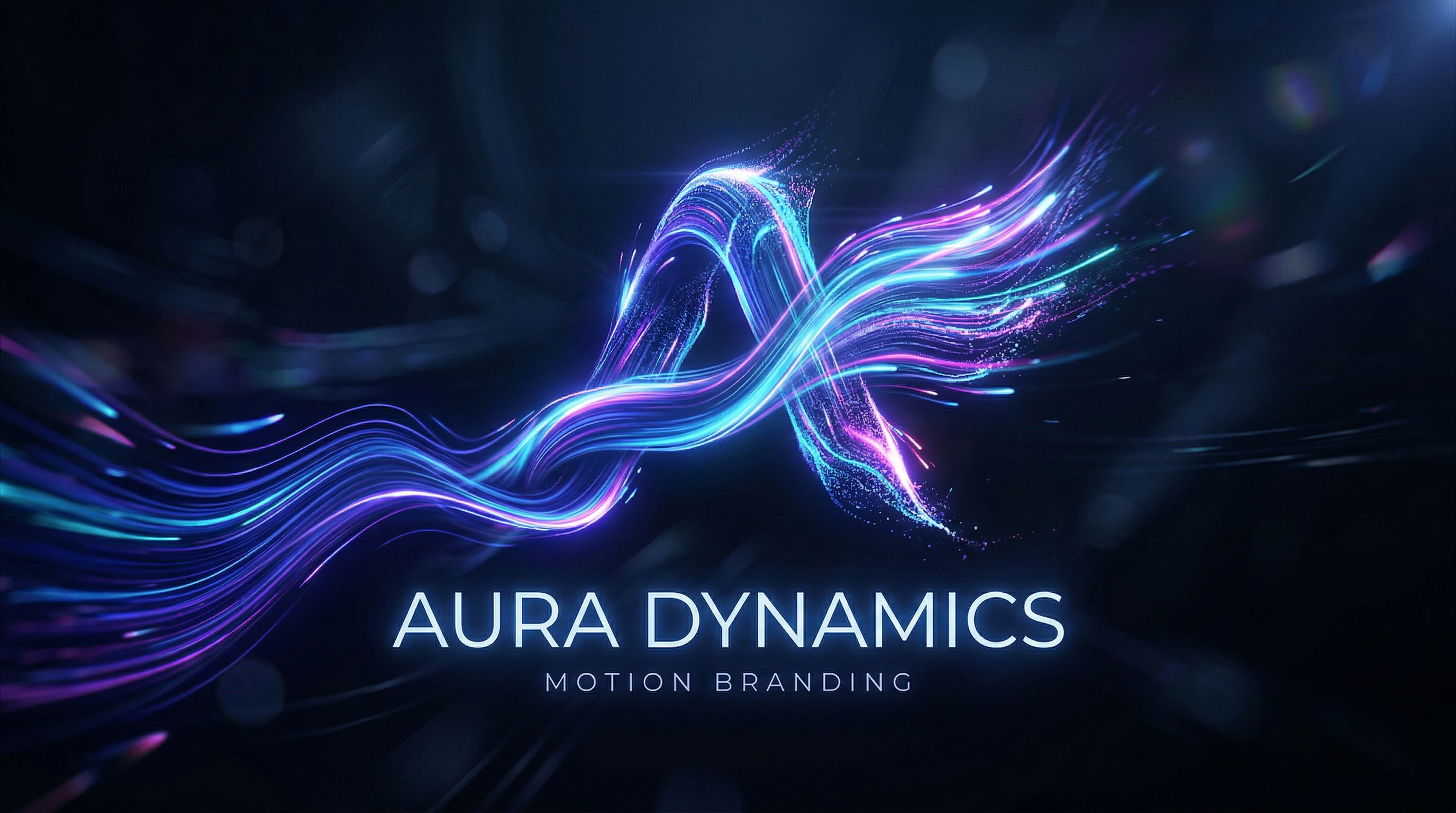
Motion branding isn't a trend. It's a natural evolution of brand identity in a world where screens are everywhere and attention is scarce. The brands that move with purpose will be remembered. The ones that haven't will blur into the background.
In short: Motion branding is the practice of extending a brand's visual identity into animation and movement — giving your logo, typography, colors, and interface a consistent, choreographed way of behaving across every digital touchpoint. It's not decoration. It's infrastructure.
For decades, brand identity lived on paper: a logo, a color palette, a typeface, maybe a set of icons. The brand guide was a PDF. The design standards were meant for print.
That era is over.
Today, your brand's first impression is more likely a loading animation on a mobile app than a business card. Your audience encounters your identity on Instagram Reels, in web transitions, through product notifications, and across TikTok ads — all moving, all in motion. And if those touchpoints feel inconsistent, disjointed, or cheap, no amount of beautiful static branding will save you.
The brands that understand this — OpenAI, Figma, Deezer, Netflix, Spotify — have done something their competitors haven't: they've built a motion identity as deliberately as they built their visual identity. They've defined not just what their brand looks like, but how it behaves.
That discipline has a name: motion branding.
What Is Motion Branding?
Motion branding is the systematic application of animation, movement, and timing to a brand's visual identity — creating a cohesive, recognizable way the brand moves, transitions, and interacts across digital platforms.
Think of it as the kinetic layer of your brand system. While a traditional brand guide defines your colors, fonts, and logo usage, motion brand guidelines define your easing curves, timing principles, transition behaviors, and animation personality. Together, they ensure that whether someone watches your product explode onto their screen or hovers over a button on your website, the movement feels like you.
Motion branding includes four core components:
- Animated logos — A logo that doesn't just sit there, but reveals, morphs, or pulses with intentional character
- Kinetic typography — Text that enters, exits, and emphasizes with motion to guide attention and convey energy
- UI/UX motion design — Transitions, micro-interactions, and loading states that create a seamless, on-brand product experience
- Sound identity — Audio cues and sonic branding that work alongside visual motion to build multi-sensory recall (think Netflix's ta-dum)
Why Motion Branding Is Now a Strategic Necessity
The case for motion branding isn't aesthetic — it's neurological. Human brains are hardwired to track movement. It's a survival instinct. That same reflex makes animated content more attention-grabbing, more memorable, and more emotionally resonant than static alternatives.
The data bears this out:
- Brands using animated content on social media see an average 120% increase in engagement compared to static posts
- People retain 95% of a message when they watch it in video form, versus just 10% when they read it
- 87% of marketing professionals say motion graphics provide significant ROI
- Video posts on Instagram have a 38% higher engagement rate than image posts
- Storytelling — which motion enables far more effectively than static imagery — can increase perceived product value by up to 2,706%
But the more compelling argument isn't engagement rates — it's differentiation. In 2026, most consumer and B2B interfaces are digital by default. Your brand lives in motion whether you plan for it or not. A logo has to animate. A product has to transition. A notification has to appear and disappear. The question isn't whether your brand will move — it's whether it will move on purpose.
Brands that treat motion as an afterthought end up with incoherent identities: a beautiful static logo that someone animated clumsily in After Effects, a product with mismatched loading states, an Instagram presence that feels disconnected from the website. Motion branding eliminates that incoherence by creating a deliberate grammar for movement — the same way a brand guide creates rules for color.
How Leading Brands Build Motion Identities
OpenAI: Trust Through Restraint
OpenAI's motion identity is a study in minimalism. Its animations are geometric, precise, and calm — never flashy. Sound-driven movement reinforces the idea of intelligence without relying on visual excess. The result is a brand that feels authoritative and trustworthy in a category where competitors often overcorrect with science-fiction aesthetics. The motion language communicates: we don't need to perform intelligence — we have it.
Deezer: Music as the System
When Deezer rebranded, it didn't just update its logo — it rebuilt its entire visual identity around a motion-first principle: music is movement. The system pulses and shifts in rhythm with whatever genre is playing, creating an identity that is literally alive. Motion wasn't an animation layer added on top of an existing brand. Motion was the strategy, and everything else followed from it.
Figma: Product Mechanics as Brand
Figma's motion language mirrors how the product actually works — swirling lines that evoke drawing tools, expanding shapes that mimic selections. The animations aren't decorative; they teach the product's behavior. In doing so, brand and product experience become the same thing: the brand communicates this is a tool built for creators, and the motion proves it.
Netflix: The Power of Consistency
Netflix's ta-dum intro is one of the most recognizable sounds in the world. Paired with its logo animation, the combination achieves something most brands never do: multi-sensory brand recall in under three seconds. This is what a mature motion identity looks like at scale — not just a logo animation, but a complete sensory signature that triggers recognition instantly.
How to Build a Motion Identity for Your Brand
Building a motion identity doesn't require a blockbuster production budget. It requires clarity, consistency, and a system.
Step 1: Define Your Motion Personality
Before you animate anything, articulate how your brand should feel in motion. Is it confident and decisive (fast, sharp cuts)? Playful and organic (bouncy easing, curved paths)? Calm and trustworthy (slow, smooth transitions)? Your motion personality should be a direct extension of your brand values — not a separate creative decision.
Step 2: Set Your Timing Principles
Choose a baseline timing system: a set of duration values (fast: 150ms, medium: 300ms, slow: 500ms) and easing curves that align with your brand personality. Sharp, linear easing feels mechanical. Ease-in-out feels organic. Ease-in feels assertive. Define these and apply them consistently.
Step 3: Animate Your Primary Brand Element
Start with your logo. A well-crafted logo animation is the highest-leverage motion asset you can create: it sets the standard for everything else, it appears in every video, every product launch, every presentation. Get this right before expanding.
Step 4: Document Motion Guidelines
Write down your rules. What duration ranges are acceptable? What easing curves are on-brand? What types of motion are off-limits? A motion guide doesn't have to be exhaustive — a clear document with your timing system, three or four reference animations, and a personality description is infinitely better than nothing.
Step 5: Apply Systematically
Roll motion guidelines into your design system so that product designers, motion designers, and social media creators are all working from the same vocabulary. Brand consistency at scale only happens through systems, not individual judgment calls.
Is Your Brand Ready for Motion?
You don't need to be Netflix to benefit from motion branding. Early-stage startups often have the most to gain — because a coherent motion identity signals maturity, craft, and intentionality that competitors frequently lack.
You're ready to invest in motion branding if:
- Your brand has a stable visual identity (logo, colors, typography) as a foundation
- You operate primarily in digital channels — app, web, social, video
- You're experiencing inconsistency across touchpoints and want to address it systematically
- You're preparing for a launch, rebrand, or funding round where first impressions matter
- Your competitors are using the same static visual language and you want to stand out
If your visual identity is still shifting, invest in the foundation first. Motion amplifies whatever identity you have — including a weak one.
The Bottom Line
Motion branding isn't a trend. It's a natural evolution of brand identity in a world where screens are everywhere and attention is scarce. The brands that move with purpose — that have thought carefully about how their identity behaves, not just how it looks — will be remembered. The ones that haven't will blur into the background.
The most effective motion identities don't shout. They have a point of view. They're consistent. And over time, they become as recognizable as a color or a typeface.
If you're building a modern brand, motion isn't optional. It's table stakes.
rgba helps modern brands build identities that move — from brand strategy and visual systems to motion design and digital experience. Get in touch to discuss your next project.
Sources
- What Is Motion Branding? A Comprehensive Guide — Pigeon Studio
- Motion Branding's Moment: Why Brands Need to Catch Up — Creative Boom
- How Motion Branding Leaves Static Imagery in the Dust — MOWE Studio
- Motion Brand Guidelines: The Ultimate 2026 Guide — Everything Design
- How Motion Graphics Can Supercharge Your Marketing ROI — Linearity
- The Rise of Motion in Brand Design — Threerooms
- 8 Branding Trends for 2026 — The Brand Strategy Lab